
Oil Prices Post Sharp Annual Decline
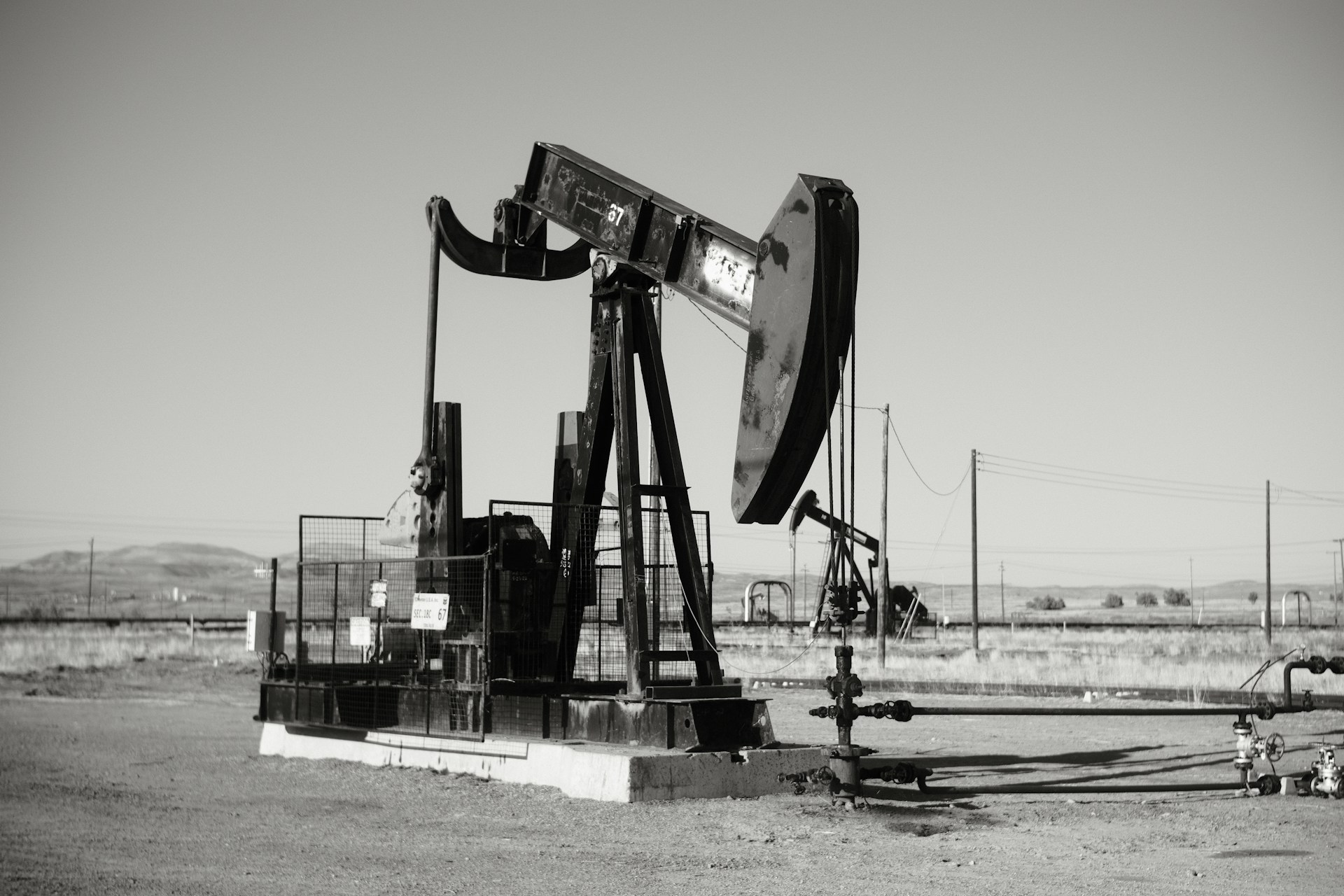
Oil markets closed 2025 with significant losses, as Brent crude prices fell nearly 20% for the year—marking a third consecutive annual drop, the longest losing streak on record. West Texas Intermediate (WTI) crude followed a similar trajectory, ending the year at $57 per barrel, while Brent closed at $61. Despite intermittent price boosts caused by sanctions on Russia, Iran and Venezuela, oil failed to maintain momentum. Even the escalation of geopolitical tensions, such as the Iran-Israel conflict, failed to provide lasting support.
This downturn was primarily driven by mounting oversupply concerns. The OPEC+ alliance ramped up output by approximately 2.9 million barrels per day since April, while U.S. shale producers continued to operate at high efficiency, supported by hedging at earlier elevated prices. The U.S. Energy Information Administration reported record domestic output in October 2025, intensifying fears of a supply glut heading into 2026.
Rising Inventories and Weak Demand
Inventory data added to the bearish outlook. While crude oil stocks saw a slight decline, gasoline and distillate reserves experienced notable increases. U.S. gasoline inventories surged by 5.8 million barrels—significantly above expectations—while diesel and heating oil stocks rose by another million barrels, underscoring the growing mismatch between supply and demand. Reduced consumption over the holiday period further weighed on prices.
Crude Oil Technical Trends Signal Further Downside
Technical indicators reinforced the pessimistic outlook. On the daily chart, Brent and WTI prices remain under pressure, with WTI’s 4-hour chart revealing a descending broadening wedge—a bearish formation. Prices have failed to break above the $60 threshold, while the Relative Strength Index (RSI) also points to further downside momentum. Analysts warn that a fall below the $55 mark could trigger sharper declines in the oil market early in 2026.
Natural Gas Faces Continued Weakness
Natural gas markets also closed the year on a subdued note. Prices fluctuated between $4.50 and $3.80 in December before closing at $3.68. The 200-day simple moving average at $3.50 offers temporary support, but further pressure is expected. The 4-hour chart indicates a failure to surpass $4.70, reinforcing the bearish momentum. Should prices breach the $3.00 level, a further slide toward $2.50 could follow, deepening the bearish trend into early 2026.
US Dollar Index Remains Under Pressure
The U.S. Dollar Index also showed signs of weakness, trading under thin holiday liquidity conditions. The daily chart reveals a downward bias, with the index poised to test the 96.50 level. A break below this support could accelerate losses toward the 90.00 range. On the 4-hour chart, a double top formation at 100.50 followed by a break below 99.00 indicates potential for further downside, with consolidation between 96.50 and 100.50 suggesting the next major move may come in the first quarter of 2026.
Regulatory Reform in Africa Drives Oil and Gas Investment
Angola Leads with Ambitious Policy Changes
As global oil prices falter, African oil producers are taking strategic steps to bolster output and attract foreign investment. Angola stands out with its sweeping reforms, including multi-year licensing rounds, the creation of the National Oil, Gas & Biofuels Agency, and the introduction of decrees to encourage incremental production. These measures have reinvigorated both mature and frontier basins, leading to major discoveries such as ExxonMobil’s Likember-01 and Azule Energy’s find in Block 1/14.
Integrated developments like Kaminho, Agogo, and the New Gas Consortium are central to maintaining production above one million barrels per day. Together, Angola’s policies have attracted an investment pipeline worth $70 billion—demonstrating how regulatory clarity can drive national energy objectives.
Nigeria Targets 2.5 Million bpd
Nigeria’s overhaul of its energy sector through the Petroleum Industry Act (PIA) of 2021 has streamlined licensing and reduced red tape, rekindling investor confidence. The government aims to raise output to 2.5 million barrels per day. Successive bid rounds in 2024 and 2025—most recently the November 2025 auction offering 50 blocks—highlight the country’s ambition to secure $10 billion in fresh investment.
Congo Expands LNG and Oil Output
The Republic of Congo is pursuing equally bold reforms, targeting production of 500,000 bpd in 2025 and increasing liquefied natural gas (LNG) output to 3 million tonnes annually. A new Gas Code, Gas Master Plan and licensing rounds are being introduced to improve the investment climate. These efforts are supported by ongoing projects such as TotalEnergies’ $600 million Moho Nord development, expanded drilling by Trident and Perenco, and the second phase of Congo LNG, launched in November 2025. The strategy aims to optimise existing reserves while drawing in new market players.
Guidance for Emerging Producers
Namibia and Uganda on the Rise
Africa’s energy giants offer a blueprint for emerging producers. Namibia, having achieved exploration success in the offshore Orange Basin, is now targeting first oil by 2029 through major projects such as Venus (led by TotalEnergies) and Mopane (led by Galp). Onshore, ReconAfrica’s December 2025 discovery at Kavango West 1x has strengthened investor interest. To maintain momentum, Namibia is advised to establish stable fiscal regimes early and avoid disruptive policy shifts.
Uganda, anticipating first oil from its Kingfisher and Tilenga fields in 2026, can also draw lessons from its peers. The 1,443-kilometre East African Crude Oil Pipeline will link Uganda’s Lake Albert basin to Tanzania’s Port of Tanga. A coordinated approach aligning upstream and midstream infrastructure with industrial policy—similar to Congo’s model—will be key to converting oil production into long-term economic gains.
African Energy Week 2026 to Drive Collaboration
As oil discoveries transition into full-scale development, regulatory frameworks must evolve accordingly. African Energy Week (AEW) 2026 is set to play a central role in this process, providing a platform for policymakers, investors and regulators to exchange ideas and advance cohesive strategies for the continent’s energy future.
NJ Ayuk, Executive Chairman of the African Energy Chamber, underlined the importance of reform:
“Africa’s energy future will be built by countries that embrace reform, attract investment and move fast. Strong policies unlock strong projects, and when regulators, investors and industry work together, we see real results—more wells drilled, more gas commercialised, and more opportunities created. If we want to make energy poverty history, then policy clarity, stability and bold decision-making must remain at the centre of Africa’s oil and gas agenda.”